§01 FUE · HAIR
FUE hair transplant.
Follicular Unit Excision · Sapphire FUE · Scalp only
FUE moves individual follicular units, one by one, from the permanent hair at the back and sides of the head to where they are needed.
Vertex Medic explains and coordinates. The clinician who would treat you decides.
Drawn, not photographed
§02 What the evidence shows
One measured case, a year apart.
A real FUE case from the Vertex Medic network. Drag the line to compare.
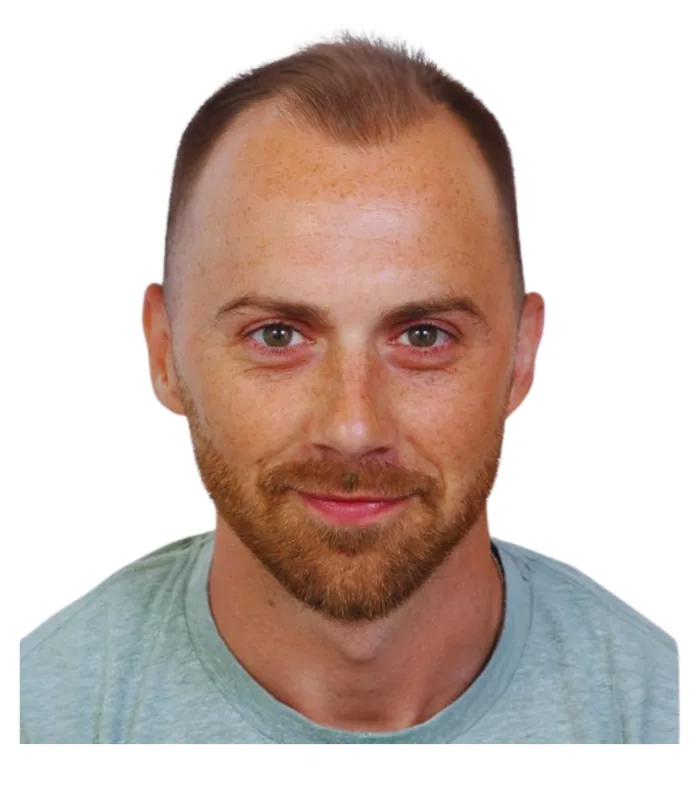
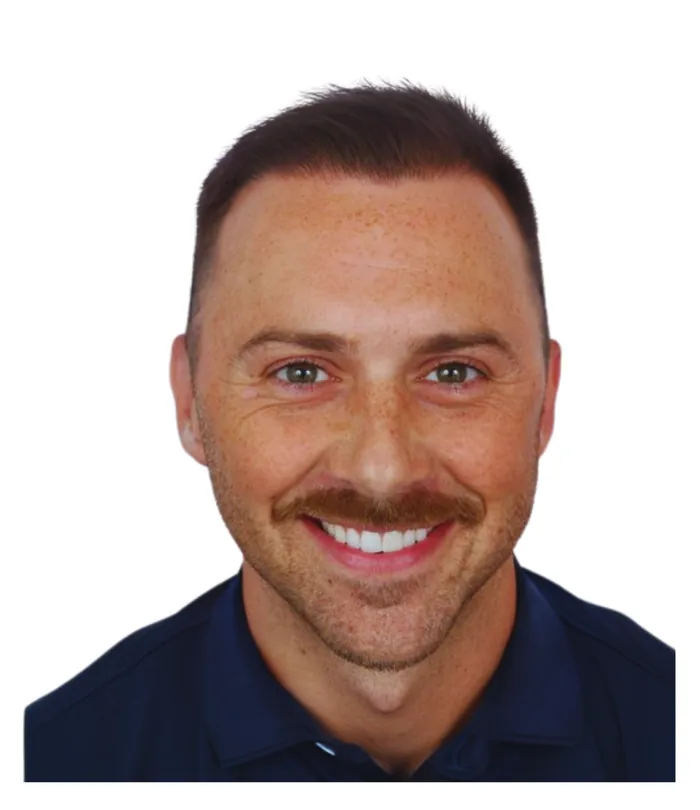
These case studies demonstrate historical procedures performed through the Vertex Medic network. Individual results vary and depend on the clinician you choose.
§03 Where hair comes from and goes
The scalp, read in seven zones.
A typical scalp, not a plan. Choose a zone to read it.
Typical zones · not a plan
Graft counts for each zone, and for the plan as a whole, are agreed at consultation as part of a written plan.
§04 What happens in a session
Three phases, drawn.
Choose a phase to read it. The same drawings explain the procedure, not a plan for you.
One follicle at a time.
Individual follicular units, natural groupings of 1 to 4 hairs, are extracted one by one from the donor zone with a 0.8mm precision micro-punch. No strip, no stitches, no linear scar.
Incisions set the whole result.
The angle, depth and direction of every incision determines whether a result looks natural. Who performs each part of the procedure is set out in writing before you book, and it is carried out under the surgeon's clinical responsibility.
Graft by graft, by hand.
Each graft is placed into its channel by hand.
FUE · FUT · DHI, compared
| Attribute | FUE | FUT | DHI |
|---|---|---|---|
| Scarring | No linear scar, tiny dots | One fine linear scar, easily hidden | Tiny dots (FUE-style extraction) |
| Healing | Minimal downtime | Ask at consultation | Similar to FUE |
| Shaving | Shaved or unshaven options | No need to shave the donor area | Often unshaven-friendly |
| Session | 4 to 8 hours, grafts dependent | 4 to 6 hours | Discussed at consultation |
Weighing techniques in depth? Read FUE vs FUT vs DHI, which is right for you.
§05 What the twelve months look like
A measured timeline.
The stages below are the approved ones. The yellow marks the evidence points.
Planted.
Every graft is in its channel. You leave with your aftercare kit and clear instructions.
Shedding begins, and it is expected.
The transplanted hairs fall out. This is normal and expected.
Resting, not lost.
The follicle beneath is alive and resting. What falls is just the shaft.
The first signs.
New hairs begin to push through, fine and soft at first.
Around 60% density.
The result is now clearly visible, and it keeps improving.
Evidence
The full result.
The hairs mature, thicken and blend with the existing hair.
Evidence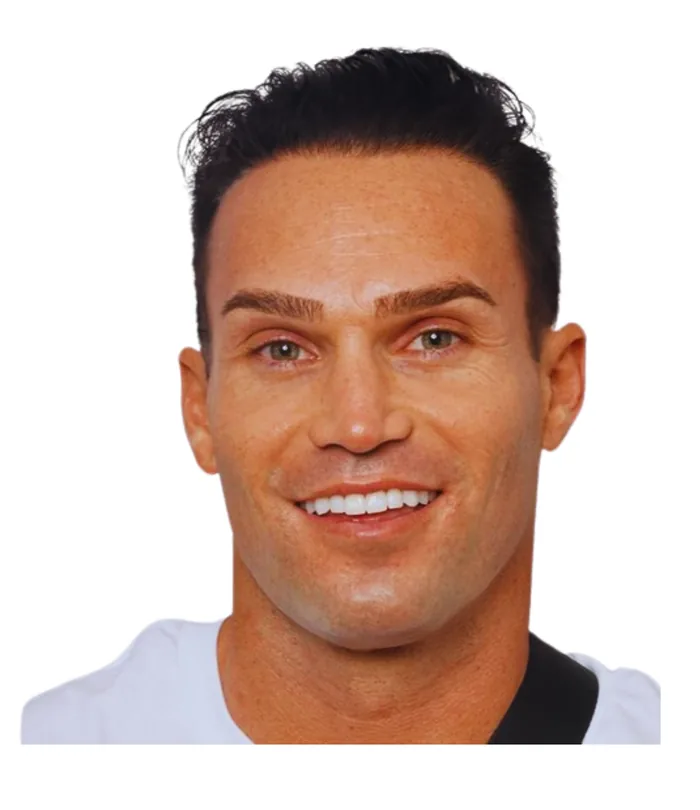
The full recovery detail is in your month-by-month recovery guide.
§06 What FUE cannot promise
What needs discussing, plainly.
What FUE cannot promise, rather than a list of disclaimers.
The treating surgeon explains your individual likelihood, risk and management.
§07 What it costs
Fixed by size. Never per graft.
Two fixed prices, set by procedure size, confirmed in writing before you book.
Payment options are explained and confirmed in writing before you book. See every price we publish.
§08 Who decides
Vertex explains. The clinician decides.
Vertex writes and explains
- What FUE is
- Where donor hair comes from and goes
- The session structure
- The twelve-month timeline
- The limits
- The pricing information available from the provider
The clinician decides
- Individual suitability
- Donor capacity
- Hairline design
- Graft numbers
- Technique
- Clinical consent
- The procedure
- Clinical aftercare
§09 What next
Start with a question.
Free · No obligation · If it is not right for you, the clinician will say so.
Further reading
Four reads before any deposit.
Common questions
Everything you want to know.
Who decides whether I am suitable?
The independent clinician decides, at your consultation, after examining your hair and donor supply. Vertex Medic explains what FUE involves and coordinates the practical side; it never decides whether surgery is right for you.
Will it look natural?
Natural results come from the angle, density and direction of each graft. Who performs each part of your procedure is set out in writing before you book, and it is carried out under the surgeon's clinical responsibility.
How many grafts will I need?
It depends on your pattern and goals. Use the zone reader above to understand which areas are involved; the number for your plan is confirmed at your consultation.
Does it hurt?
The only discomfort is a few small anaesthetic injections at the start. After that, nothing, and most patients relax through the day.
What is shock loss?
Transplanted hairs shed in weeks 2 to 4, this is normal and expected. The follicle stays alive beneath the surface and regrows from month 3. It is a sign things are working, not failing.
Will my donor area look thin?
The surgeon harvests carefully and evenly so the donor area stays dense. Your donor hair is genetically resistant to thinning, and it keeps that permanence wherever it is placed.
When can I go back to work?
Most patients return after 2 to 3 days. There is mild redness for a few days; the clinician talks through covering it and the timeline at your consultation.
Can women have transplants?
Yes, for suitable candidates with stable donor hair. Female hair loss often has a hormonal cause, which is why understanding the cause comes first.
Will I need more than one session?
Many results are achieved in one session. Larger or more advanced patterns may be staged across two, planned honestly up front, never as a surprise.
How long until I see the full result?
First growth at month 3, around 60% density by month 6, and the full result at 9 to 12 months as the hairs mature and thicken.